
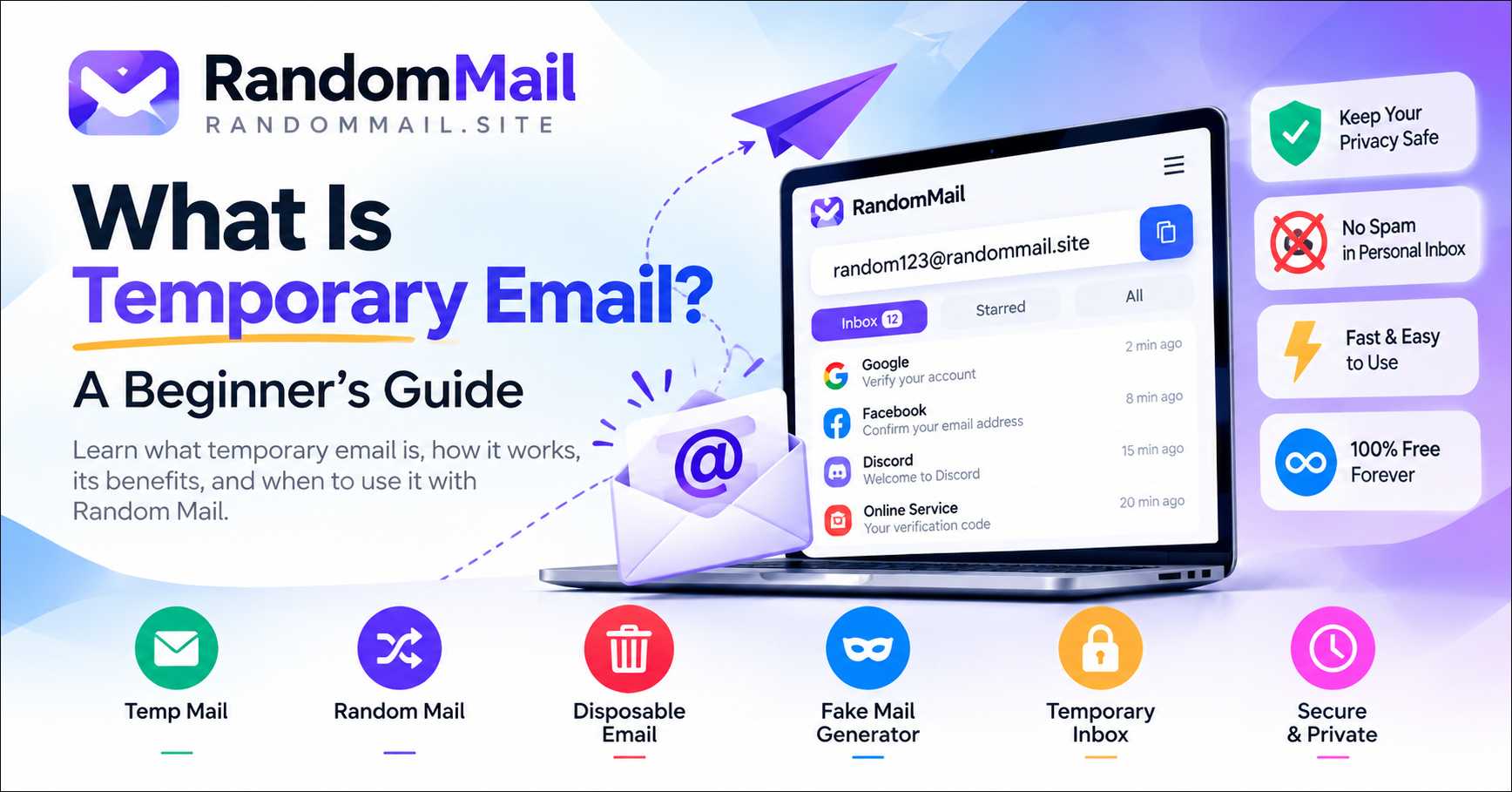
A temporary email address is an email address intended for short-term online activities. It can be useful when you do not want to share your primary email address with every website or online service.
What Is Temporary Email?
Temporary email is also commonly called temp mail, disposable email, throwaway email, or a temporary inbox. Although these terms are related, the features, availability, and privacy protections of different services can vary.
In this guide, we will explain how temporary email works, when you might use it, its benefits and limitations, and what to consider before choosing a service such as Random Mail.
How Does Temporary Email Work?
A temporary email service provides a way to access an email address for a limited or service-defined purpose. The exact process depends on the provider.
A typical process looks like this:
- Visit a temporary email website.
- Review the instructions and access options provided by the service.
- Use an available email address for an appropriate online activity.
- Return to the inbox to check for incoming messages, if the service supports this feature.
- Follow the provider's instructions for message access and retention.
Some providers may generate an address automatically, while others may offer different ways to select or manage an address. Message availability and retention periods are not the same across all services.
Before relying on a temporary inbox, check how the address works and whether you will be able to access the messages you need.
What Are the Benefits of Temporary Email?
Temporary email can help separate certain online activities from your everyday email account. However, it should be treated as a practical option for appropriate situations rather than a replacement for every type of email account.
1. Reduce Unwanted Messages
Using a separate address for appropriate short-term activities can help keep some promotional and low-priority messages away from your primary inbox.
2. Separate Online Activities
A disposable email address can help you keep temporary registrations or low-risk website testing separate from your everyday communications.
3. Test Websites and Applications
Developers and website owners may use suitable test email addresses when checking registration forms, confirmation messages, or other email-related workflows. Testing should follow the rules of the service being tested.
4. Keep Your Primary Address Private
A temporary email address can reduce the need to disclose your main email address in certain situations. However, it does not guarantee anonymity or complete privacy.
Temporary Email, Temp Mail, Disposable Email, and Random Mail
People use different search terms when looking for temporary email services.
- Temporary Email: An email address intended for temporary or short-term use.
- Temp Mail: A common short form of temporary email.
- Disposable Email: An email address used for a particular purpose that may not need to be retained long term.
- Throwaway Email: An informal term often used for an address intended for limited use.
- Random Mail: A term people may use when looking for a randomly provided email address or a service branded with that name.
- Fake Mail Generator: A search phrase sometimes used for tools that generate temporary or disposable addresses. Actual features vary by provider.
These terms overlap, but they do not necessarily describe identical features. Always check what a particular service actually provides.
Random Mail publishes information about temporary email and related topics. Before using any email service, including Random Mail, review the site's current instructions and privacy information so you understand how its address and inbox features work.
When Should You Use a Temporary Email Address?
A temporary email address may be suitable for certain low-risk activities, depending on the website's rules and the capabilities of the email service.
Examples include:
- Testing a website or application that you manage.
- Separating a low-priority online registration from your personal inbox.
- Trying a service that explicitly accepts disposable email addresses.
- Receiving an ordinary confirmation message when temporary email use is permitted.
Do not use a temporary address to bypass a website's restrictions, create unauthorized accounts, or engage in abusive activity.
When Should You Avoid Temporary Email?
Temporary email is generally unsuitable for important accounts that require long-term access, identity verification, or reliable password recovery.
Avoid relying on an address you may lose access to for:
- Banking, payment, or financial accounts.
- Government, healthcare, or other sensitive services.
- Your main work or business accounts.
- Important shopping accounts containing order histories or receipts.
- Accounts that you may need to recover in the future.
Never assume that a temporary inbox is private simply because the address is temporary. Depending on the provider, messages or inboxes may have different access and retention rules.
How to Choose a Temporary Email Service
Before using a temp mail or disposable email service, consider the following questions.
Is the service clear about how it works?
Look for understandable instructions about accessing an email address and receiving messages.
Does it explain message retention?
Check whether messages are stored temporarily, when they may disappear, and whether the inbox can be accessed again.
Does it explain privacy limitations?
Understand what information may be visible to other users or processed by the provider. Do not submit sensitive information to an inbox unless you fully understand its protections.
Does the website allow temporary addresses?
Some websites do not accept disposable email addresses. Follow their account and registration policies.
Is a permanent address more appropriate?
For accounts that matter over the long term, a reliable email address that you control is usually the more appropriate choice.
Frequently Asked Questions
What is temp mail?
Temp mail is a common term for temporary email. It refers to an email address intended for temporary use, although the features and duration depend on the provider.
Is temporary email the same as disposable email?
The terms are often used interchangeably, but individual providers may use them differently. Check the actual features of the service rather than relying on the name alone.
Can I use temporary email for verification?
Some websites accept temporary email addresses, while others block them. You should follow the website's rules and use an email address you can reliably access for important accounts.
How long does a temporary email last?
There is no universal duration. The availability of an address and its messages depends on the service's rules and technical design.
Is temporary email completely private?
No temporary email service should automatically be assumed to provide complete privacy or anonymity. Review the provider's privacy policy and understand the limitations before using it.
What is the difference between Random Mail and temp mail?
Temp mail is a general term for temporary email services. Random Mail is a brand name used by this website. To understand the available features, check the actual options and instructions on the Random Mail website.
Conclusion
Temporary email can be useful for separating appropriate short-term online activities from your primary inbox. It can also help with certain testing tasks and low-risk registrations when disposable addresses are permitted.
Before choosing a temporary email service, understand how its inbox works, review its privacy information, and consider whether you will need long-term access to the address.
Explore Random Mail to learn more about temporary email and related email topics, and always choose the type of email account that best fits your needs.