
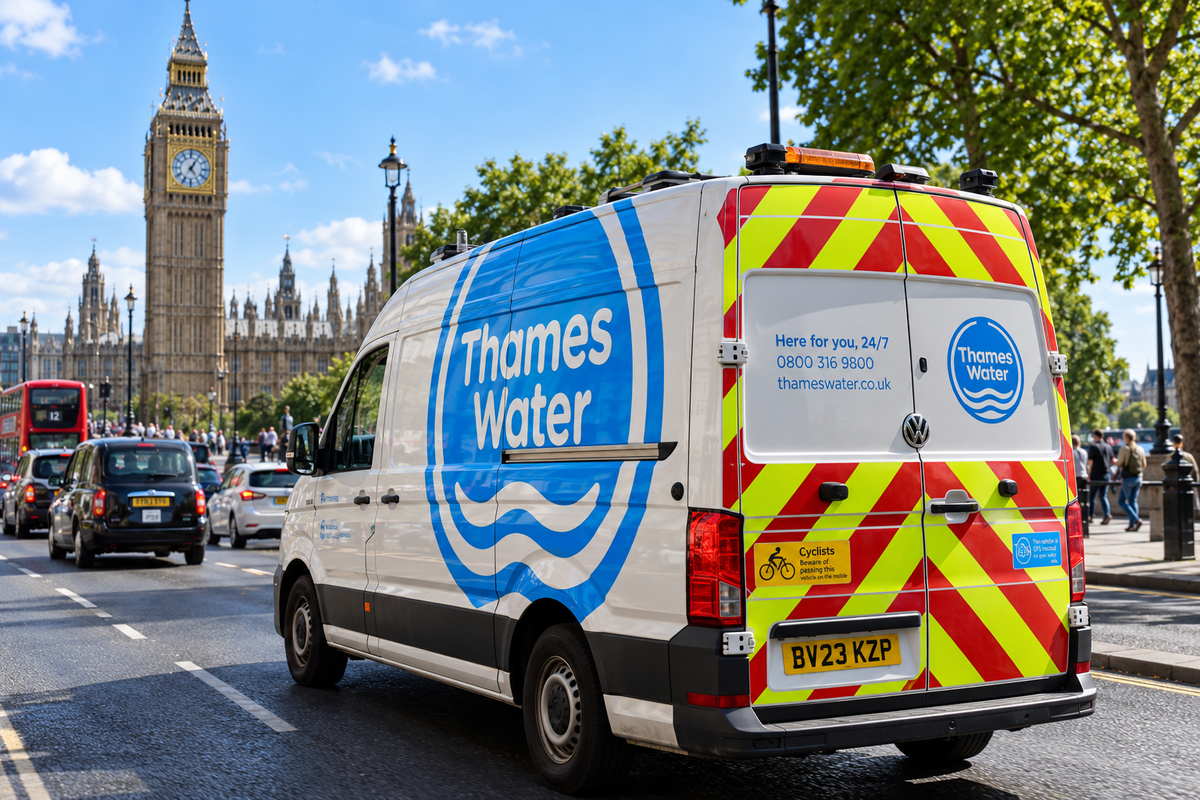
Prime Minister Andy Burnham has instructed policy advisers across Whitehall to discard previous frameworks for addressing the financial crisis at Thames Water, demanding a new set of aggressive options for the troubled utility. The development represents an early stress test for the administration's broader commitment to place essential public services under government supervision, moving away from past economic approaches.
Exploring Unconventional Paths
Administrators have been instructed to evaluate approaches previously dismissed as unfeasible, even if those paths require taxpayer expenditures or prolonged legal battles. One proposal under consideration involves converting roughly one hundred million pounds of outstanding company fines into a formal government equity stake. Such a move would alleviate financial pressure on creditors while granting state authorities a direct voice in corporate management, bypassing standard fine collection methods in favor of automatic share increases should future penalties occur.
Thames Water faces severe cash shortages and recently approached creditors seeking an additional 2.4 billion pounds. While previous policy debates centered on the high costs and legal complexities of nationalization, current leadership has directed officials to look beyond prior constraints. Observers inside government describe the unfolding situation as a definitive test of the administration's capacity to manage complex medium-term economic challenges rather than relying solely on immediate cost-of-living adjustments or structural changes.
Legislative Shifts and Longer-Term Planning
The directive arrives alongside broader legislative efforts led by Environment Secretary Angela Eagle, who is drafting a water bill designed to remove a longstanding cap on state ownership of water companies. That legislation could also overhaul the specialized bankruptcy administration framework, making it simpler for the government to absorb struggling providers into public control in the future. Government advisers believe these alterations to the special administration regime would facilitate state interventions that were previously difficult to execute.
The prime minister has previously articulated an intent to transition away from decades of preceding economic models, planning a comprehensive ten-year governmental agenda that features detailed blueprints for utility management. However, finding a viable path for Thames Water without incurring prohibitive expenses or triggering protracted litigation remains a formidable challenge for economic policymakers.
Administrative Hurdles and Unresolved Questions
While internal planning accelerates, several administrative and financial uncertainties persist. Government lawyers previously noted the difficulties of placing Thames Water into the special administration regime while creditors keep the company afloat and services running. Furthermore, earlier rescue plans proposed by American hedge funds and other creditors failed to gain traction under previous environmental leadership, leaving the utility's immediate financial trajectory deeply uncertain.
The precise mechanisms for absorbing the utility's massive capital requirements without destabilizing public finances have not been finalized, and the timeline for introducing the new legislative measures remains subject to further government review as officials weigh whether the fine-conversion scheme fulfills broader pledges of outright nationalization.